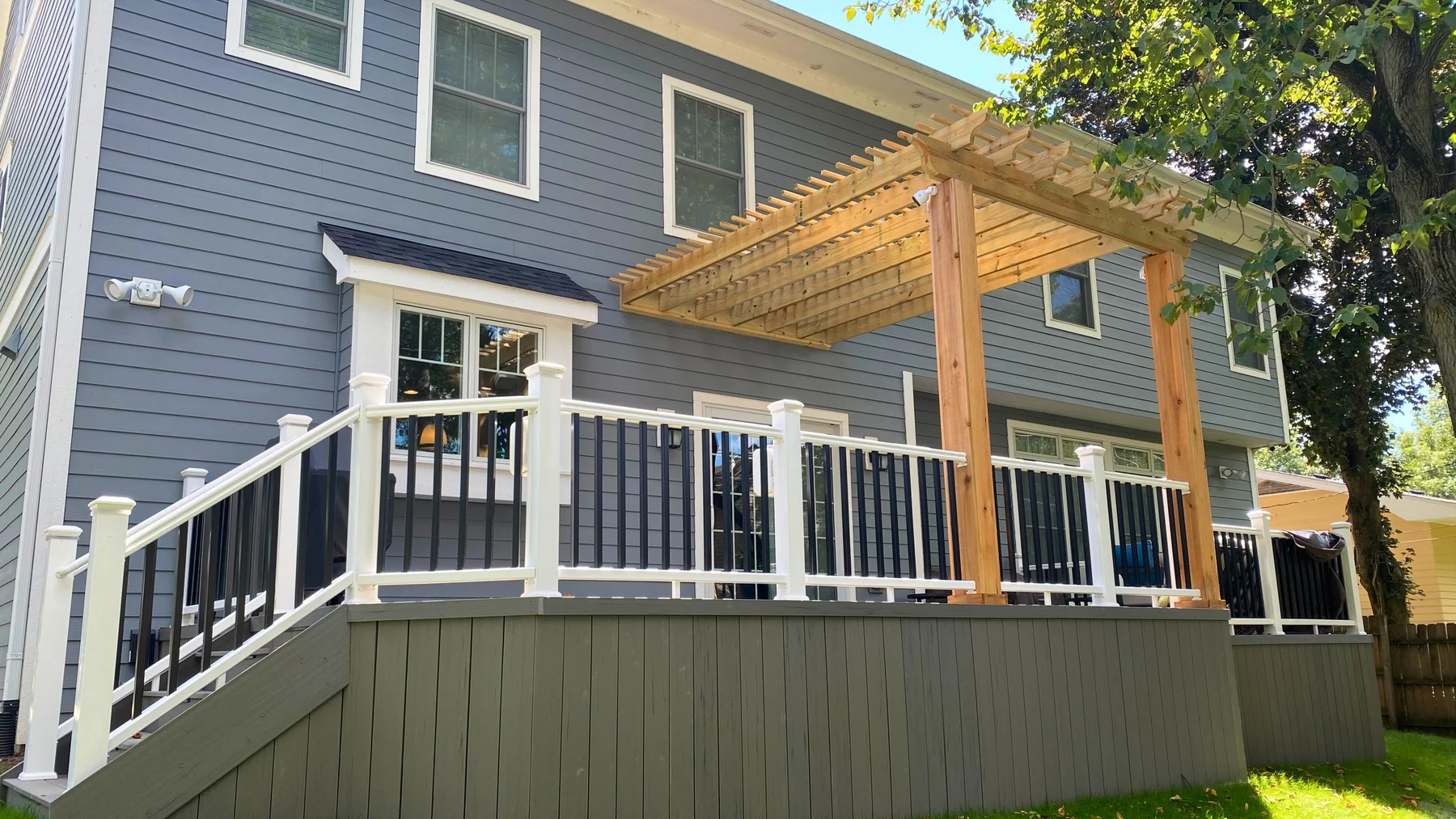
A well-built deck is one of the better investments you can make in a Smoky Mountain home, but a quality multi-level or hillside deck is not a small purchase. The good news is that you do not have to pay for it all at once. Several financing paths make a deck affordable, and in this rental-heavy market, a deck can even help pay for itself. Here is an honest look at the ways Sevierville homeowners and cabin owners fund a new deck.
Why a deck is worth financing
Unlike many purchases you finance, a deck adds real, lasting value. In the Smokies, outdoor living space with a view is a major draw, and a good deck consistently returns a strong share of its cost at resale while you enjoy it in the meantime. For a rental cabin, the deck is often the amenity that closes the booking. Financing a value-adding improvement is a very different proposition than financing something that only depreciates, and it is worth keeping that distinction in mind as you weigh the cost.
Home equity loans and lines of credit
For homeowners with equity, a home equity loan or line of credit is often the lowest-cost way to fund a deck. Because the loan is secured by your home, interest rates are typically lower than unsecured options, and the interest may be tax-advantaged when the money improves the property, though you should confirm that with your tax advisor. A line of credit is especially handy for a phased project, letting you draw as the work progresses. The trade-off is that your home is the collateral, so it suits owners comfortable with that.
Personal loans
If you do not want to borrow against your home or you lack the equity, an unsecured personal loan is a common route. Rates are higher than home-equity options because there is no collateral, but approval is often faster and the process simpler, with no appraisal and a fixed payment schedule that makes budgeting easy. For a mid-sized deck project, a personal loan can be the path of least resistance, and the fixed term means you know exactly when it will be paid off. Shop a few lenders, because rates vary widely by credit profile.
Contractor and third-party financing
Many deck projects can be financed through the contractor via third-party lending partners, sometimes with promotional terms. This can be convenient, folding the financing into the same conversation as the build, and occasional zero-interest introductory periods are genuinely useful if you can pay within the promo window. Read the fine print, though: deferred-interest offers can be costly if the balance is not cleared in time. Used carefully, contractor financing is a legitimate tool, especially for homeowners who prefer to keep the whole project under one roof.
Cash and phased building
Paying cash avoids interest entirely and is the cheapest approach when it is feasible. If a full cash payment is a stretch, phasing the project is a middle path: build the main deck now and add the lower level, the pergola, or the outdoor kitchen later as funds allow. A good builder can design the deck so future phases attach cleanly rather than requiring rework. Phasing lets you spread the cost over time without financing charges, though material and labor prices can rise between phases, so weigh that against the interest you would otherwise pay.
Letting rental income help
Here is where Sevierville is special. If your deck is on a short-term rental cabin, it is not just an expense, it is an income-producing asset. A larger deck with a hot tub, mountain views, and comfortable outdoor living commands higher nightly rates and stronger occupancy, so the added bookings can offset the financing payments. Many cabin owners in this market treat a deck upgrade as a business investment, financing it against the very income it helps generate. Run the numbers on the rate bump a better deck could support; it is often more than the loan payment.
What a deck actually costs here
Financing decisions start with a real number, and deck costs in the Sevierville area vary widely with size, height, materials, and how steep the lot is. A ground-level wood deck is far cheaper than a tall, multi-level composite deck stepping down a hillside with stairs and railings. Because our lots are so often steep, the framing and footing work can be a larger share of the cost than the surface itself. An accurate, itemized quote is essential before you choose a financing amount, so you borrow what the project truly needs and no more.
Protecting your investment
However you pay, the deck only holds its value if it is built well. A cheap deck financed at a low rate is still a poor deal if it needs major repairs in five years. Quality framing, proper footings for our freeze-thaw winters, and materials suited to the Smoky Mountain climate are what make a deck last long enough to justify financing it. Spending a little more on a deck built to endure is almost always smarter than saving upfront on one that will not, especially when you are paying interest on the difference.
Getting an itemized quote first
Before you talk to any lender, get a detailed, written quote that breaks out framing, footings, decking, railings, stairs, and any add-ons. That document tells you exactly how much to finance, lets you compare builders fairly, and gives a lender confidence in the project. It also lets you see where you could phase or adjust scope to fit your budget. We provide clear, itemized estimates precisely so homeowners can make sound financing decisions rather than borrowing against a vague guess.
Timing your project
When you build can affect both cost and financing. Deck season is busy in the Smokies, so booking a build in the shoulder months can sometimes mean better scheduling and, for rental owners, completing the work before peak booking season arrives. From a financing angle, locking a rate before you expect rates to move, or timing the project so payments begin as rental income ramps up, can make the numbers work better. It is worth having the cost and financing conversation early, well before you want to be enjoying the finished deck, so the timeline serves both the build schedule and your budget rather than forcing a rushed decision on either.
The bottom line for Sevierville owners
You have real options for paying for a deck, from low-cost home equity to fast personal loans, contractor financing, cash, and phased building, and in this market, rental income can shoulder much of the load. The right choice depends on your equity, your timeline, and whether the deck is for your own enjoyment or your booking calendar. Start with an accurate, itemized quote, weigh the financing paths honestly, and remember that a well-built Smoky Mountain deck is an investment that pays you back in both value and enjoyment. We are glad to help you plan one that fits your budget.