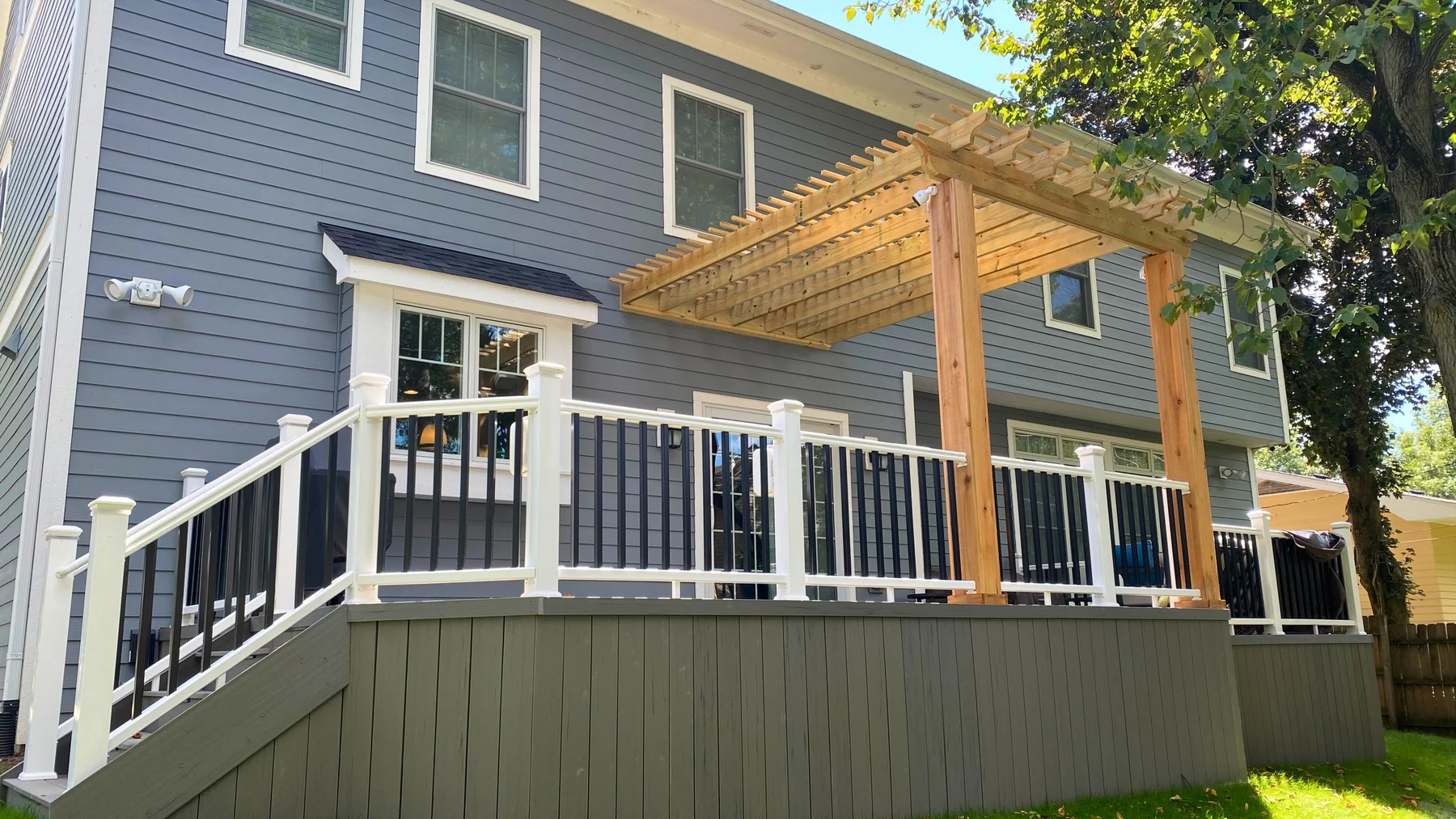
It is a question we hear on nearly every project: do I actually need a permit to build a deck around here? It is tempting to skip the paperwork, especially on a big rural lot, but in Sevier County a deck permit is about far more than red tape. It is what ensures your deck is structurally safe on our steep, rocky terrain and protects you when it comes time to sell, insure, or rent the property. Here is what you need to know about deck permits in our area, what inspectors look for, and why permitting is worth doing right.
As a general rule, attached decks, elevated decks, and any deck above a minimal height require a building permit, and that covers the vast majority of decks built in the Smokies, where homes and cabins so often sit up off sloped ground. Only very low, small, freestanding platforms sometimes fall under an exemption. Because the specifics vary between the cities of Sevierville, Pigeon Forge, and Gatlinburg and the unincorporated parts of Sevier County, the only reliable answer for your project is to confirm with the local building department. That verification is something we take care of before we build.
Permits exist to make sure a structure is safe, and nowhere is that more important than on the steep, rocky lots common around here. A deck elevated a full story or more off a slope carries serious loads and depends entirely on proper footings, framing, and connections. The permit and inspection process is what verifies that work is done correctly, before anyone stands on it. On the flat backyard of a subdivision the stakes are lower; on a Smoky Mountain hillside, cutting corners on a permitted, engineered deck can be genuinely dangerous.
A deck inspection focuses on the things that keep the structure standing and people safe: footing depth and size, the posts and beams, joist spans and spacing, the ledger connection where the deck attaches to the house, and the fasteners and hardware holding it all together. Inspectors also check railing height and baluster spacing, stair construction, and load capacity. Each of these has a code requirement behind it, and the codes are based on the model standards maintained by bodies like the International Code Council. A deck built to those standards passes cleanly; one that is not gets flagged.
Two areas cause the most trouble, and both are ones inspectors scrutinize. The ledger board, where an attached deck connects to the house, must be fastened and flashed correctly, because a failed ledger is a leading cause of deck collapses nationally. And on our slopes, footings have to reach proper depth and bearing on ground that is often rock or fill, which takes real know-how. These are exactly the details a permit and inspection are designed to catch, and exactly where an experienced local builder makes the difference between a deck that lasts and one that does not.
If your deck is on a short-term rental, permitting is not just about code, it is about liability. A deck full of guests represents real load and real risk, and if someone is injured on an unpermitted or unsafe deck, the consequences can be severe. Many rental platforms, insurers, and local rental regulations also expect structures to be permitted and up to code. Building your cabin deck to permitted standards protects your guests and your business, which is why serious rental owners in the Smokies never treat it as optional.
Building without a permit can feel like a shortcut, but it tends to catch up with owners. You can face fines, stop-work orders, or a requirement to tear out and rebuild noncompliant work, and an unpermitted deck becomes a problem the moment you try to sell, since it shows up during inspection and can derail or discount a sale. Appraisers and insurers view unpermitted structures unfavorably too. What looks like saved time and money up front often costs far more later, on top of the safety risk.
For our clients, the permit process is not a burden they have to shoulder alone. We confirm the requirements for your specific location, prepare the plans and paperwork, pull the permit, and build to code so the project passes inspection the first time. Handling this correctly is part of delivering a deck you can rely on and enjoy without worry. It also means the finished deck adds value cleanly rather than becoming a liability hiding in your property records.
Homeowners often worry that permitting will blow up their budget or timeline, but in practice it is a modest and predictable part of a deck project. Permit fees in Sevier County are typically based on the size or value of the deck and are a small fraction of the overall build, and the review turnaround is usually reasonable when the plans are complete and drawn correctly the first time. The delays people fear almost always come from incomplete submissions or work that has to be corrected after a failed inspection, not from the permit process itself. Because we prepare accurate plans and build to code from the start, the permitting stage rarely holds a project up. Factoring it in from day one, rather than treating it as an afterthought, keeps your deck project on schedule and free of the expensive surprises that come from trying to permit, or fix, a deck after the fact.
In almost every case, yes, your deck needs a permit in Sevier County, and on our mountain terrain that is a good thing. Permitting ensures the deck is safe on steep ground, protects you at resale and with insurance, and is essential for any rental cabin. Rather than gambling on a shortcut, work with a builder who confirms the rules for your location and builds to code from the footings up. Reach out and we will handle the permitting and the construction the right way.
In almost all cases, yes. Attached decks, elevated decks, and decks above a minimal height generally require a building permit, and the rules can differ inside city limits like Sevierville, Pigeon Forge, and Gatlinburg versus unincorporated county land. Because permit requirements and enforcement change and depend on your exact location, always confirm with the local building department before you build. We handle that check and the paperwork as part of our projects.
Skipping the permit can mean fines, being ordered to tear out or rebuild the deck, and trouble when you sell or insure the property, since an unpermitted structure raises red flags during inspections and appraisals. For a rental cabin, an unsafe or unpermitted deck is also a serious liability if a guest is hurt. Permitting protects you legally, financially, and where safety is concerned, which is why we never skip it.
How Your Deck Can Boost Bookings for a Smoky Mountain Rental Cabin — Custom decks and outdoor living spaces designed and built across Sevierville and the Smokies.