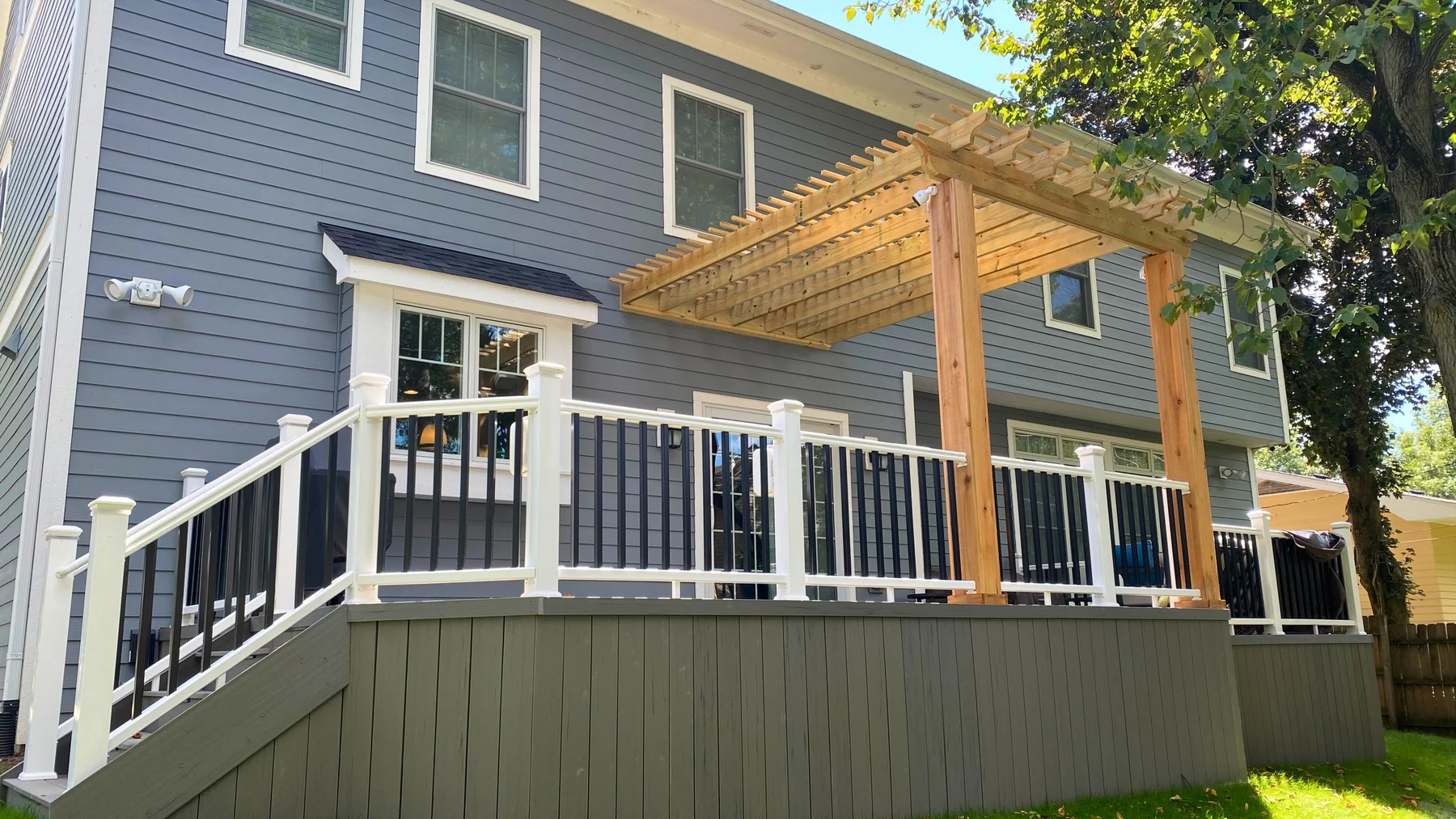
Every Smoky Mountain deck eventually reaches the point where it looks worn, the boards feel rough, and the whole thing seems overdue for attention. The instinct is often to tear it all out and start over, but that is not always necessary, and sometimes it is not enough. The real question is whether your Sevierville deck needs resurfacing, meaning new boards on the existing frame, or a full rebuild of the structure itself. Choosing correctly saves money on one end and prevents a safety hazard on the other. Here is how to tell the two situations apart.
Resurfacing keeps the bones of your deck and renews everything you see and touch. The old decking boards come off, the framing underneath is inspected and repaired as needed, and fresh boards, often composite for the low maintenance mountain owners crave, go down along with new railings. It is a transformative, cost-effective refresh when the structure below is genuinely sound. A deck that has faded, splintered, or gone gray on top but stands solid underneath is the ideal candidate, and resurfacing gives it another long life for a fraction of a full rebuild.
The catch is that decking boards are only the surface. Everything holding the deck up, the joists, beams, posts, footings, and the ledger board bolting it to the house, does the actual work of keeping people safe. If that framing has rotted, pulled loose, or been eaten by insects, no amount of beautiful new decking makes the deck safe. Laying fresh boards over a compromised frame simply hides the danger. When the substructure has failed, a full rebuild is not the expensive option; it is the only responsible one.
Here is what makes this decision tricky in our area: the framing often deteriorates faster than the boards, and out of sight. Smoky Mountain humidity, shade, and the constant damp of fog and rain drive moisture into the joist pockets, post bases, and ledger connection where it lingers and rots wood from the inside. A deck can look merely weathered on top while the structure beneath is well down the road to failure. This is exactly why a decision between resurfacing and rebuilding should never be made from the surface alone.
Resurfacing costs meaningfully less than a full rebuild because you keep the structure and the labor that goes into footings and framing. That savings makes it tempting to assume resurfacing is always the answer, but the math only works if the frame is truly sound. Spending on new boards and then discovering the structure needs replacement a year later is the worst of both worlds. An honest inspection up front tells you which project you actually have, so you can budget for the real work rather than a hopeful guess.
The right path always starts with someone getting under the deck and evaluating the structure, not with a sales pitch for the more expensive option. For an owner-occupied home a compromised deck is a family safety issue; for a rental cabin near Sevierville or Pigeon Forge it is a liability with guests on it constantly. Once you know the frame is sound, resurfacing is a smart, economical renewal. When the structure has given out under years of Smoky Mountain moisture, rebuilding is the only choice that keeps people safe. Either way, the decision belongs to the inspection, not the eyeball.
Resurfacing replaces the decking boards and often the railings while keeping the existing frame, joists, and footings. Rebuilding replaces the structure itself. The right choice hinges entirely on the condition of the framing underneath: if the substructure is sound, resurfacing is a cost-effective refresh, but if the joists, posts, or footings have rotted, new boards on a failing frame is money spent on something unsafe.
It takes a real inspection, not a glance. A builder checks the joists and beams for rot and insect damage, probes the posts where they meet the ground or footings, examines the ledger connection to the house, and tests for movement. In the Smokies, the hidden framing often deteriorates faster than the visible boards because moisture collects where you cannot see it, so a deck that looks merely tired on top can be compromised underneath.
How Your Deck Can Boost Bookings for a Smoky Mountain Rental Cabin — Custom decks and outdoor living spaces designed and built across Sevierville and the Smokies.