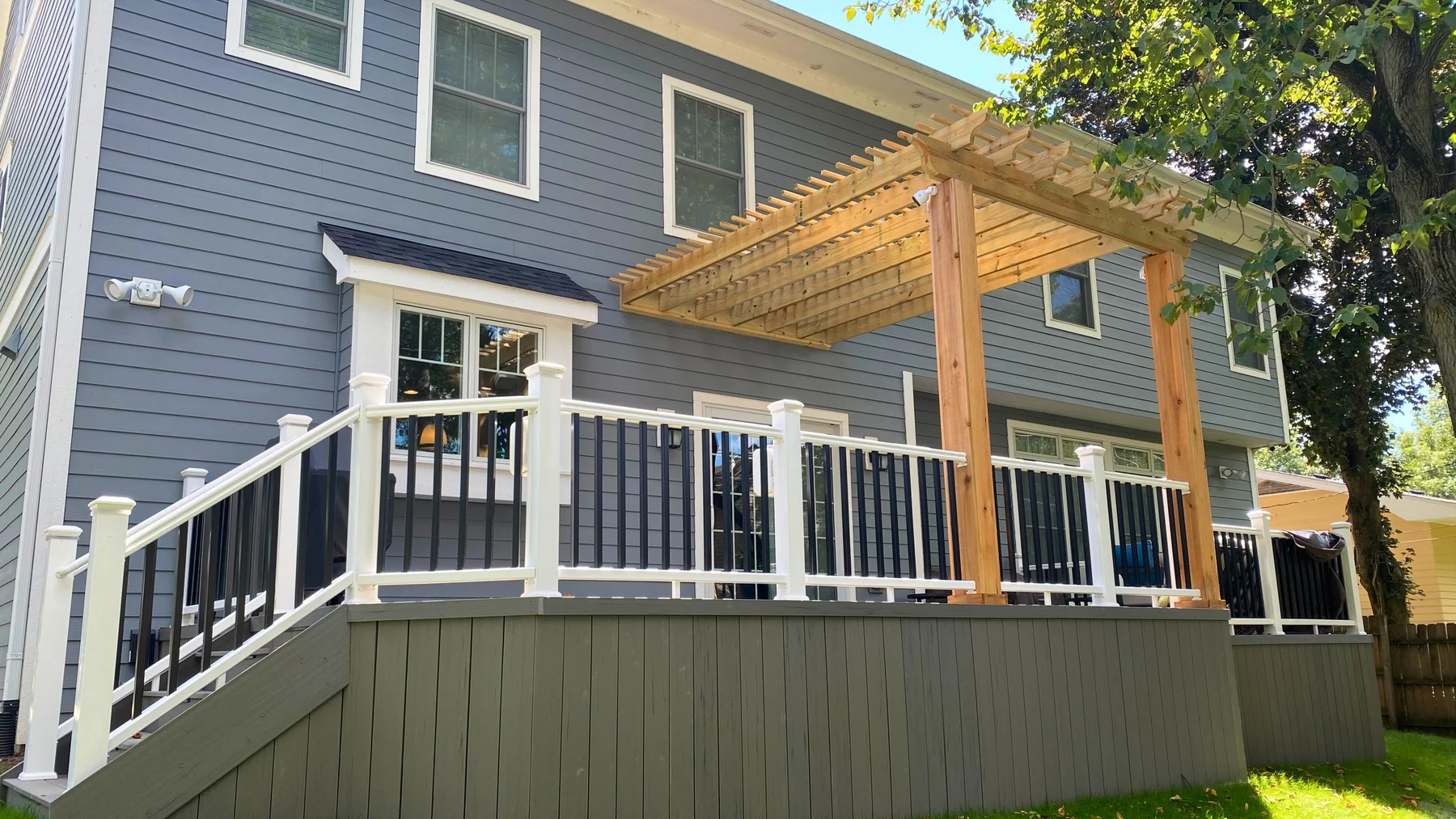
Drive through the cabin communities around Sevierville, Pigeon Forge, and Wears Valley and you will notice how many of the standout properties share one feature: a deck that wraps around the building instead of clinging to a single wall. The wraparound deck has become a Smoky Mountain signature, and for good reasons that go beyond looks. It captures the view from every angle, tames a sloped lot, and effectively doubles a cabin's living space. Here is why the wraparound suits these mountains and what to think through before you build one.
The core appeal is simple: mountain views change with the time of day and the direction you face, and a single-side deck locks you into one of them. A wraparound lets guests move with the light, coffee on the east side at sunrise, a shaded corner in the afternoon heat, and the sunset side come evening. In a landscape as scenic as the Smokies, giving people the whole panorama rather than one slice of it transforms how a cabin feels, and it is exactly the kind of experience that fills a five-star review.
Beyond the view, the wraparound solves a very real problem in this terrain. Lots around Sevierville and the Gatlinburg foothills are rarely flat, and usable outdoor ground can be scarce. Wrapping a deck around the cabin creates level, usable space where the hillside offers none, and it can tuck under itself on the downhill side to add covered storage or a lower patio. What looks like a design flourish is often the most practical way to get functional outdoor living onto a steep mountain parcel.
A good wraparound is zoned, not just continuous. The dining side wants to sit near the kitchen door, the hot tub or lounging area benefits from a more private corner, and the main gathering space should open off the great room. Multiple access points let a full cabin flow outside without bottlenecks, which matters in the large group rentals this area is known for. Thinking about traffic and function around the entire perimeter is what keeps a big wraparound from becoming a beautiful but awkward walkway.
Because a wraparound presents so much surface to the weather, and to sun on some faces and shade on others, material choice matters. Composite and capped decking hold color and resist the moisture damage that mountain shade and fog inflict on wood, and they ease the maintenance burden of a large deck. The corners and level transitions are where craftsmanship shows, so tight framing and clean railing joints separate a quality wrap from a choppy one. Building it to handle Smoky Mountain freeze-thaw and humidity from the start keeps the whole perimeter looking sharp for years.
A wraparound is a larger project simply because it is a larger deck, though the cost per square foot tracks close to a standard deck in the same materials. For an owner-occupied home it is a lifestyle upgrade; for a rental cabin it is a booking engine, since abundant, view-facing outdoor space is one of the strongest selling points in the Sevierville market. Guests picture themselves on that deck when they scroll the listing, and a well-built wraparound makes the whole cabin feel bigger and more special than its square footage suggests.
Because the view rarely sits on just one side. A wraparound deck follows the cabin around corners so guests can chase the morning sun, the sunset, and the best ridgeline angle without leaving the deck. On the sloped lots common around Sevierville and Wears Valley, wrapping the deck also creates level outdoor space where the ground itself offers none, which is a practical win as much as an aesthetic one.
It costs more because there is simply more of it, plus the corners, framing transitions, and often multiple access points add complexity. That said, the price per square foot is usually similar to a standard deck of the same materials; you are paying for area, not a premium style. For a rental cabin, the added outdoor living space frequently justifies the cost through stronger bookings.
How Your Deck Can Boost Bookings for a Smoky Mountain Rental Cabin — Custom decks and outdoor living spaces designed and built across Sevierville and the Smokies.