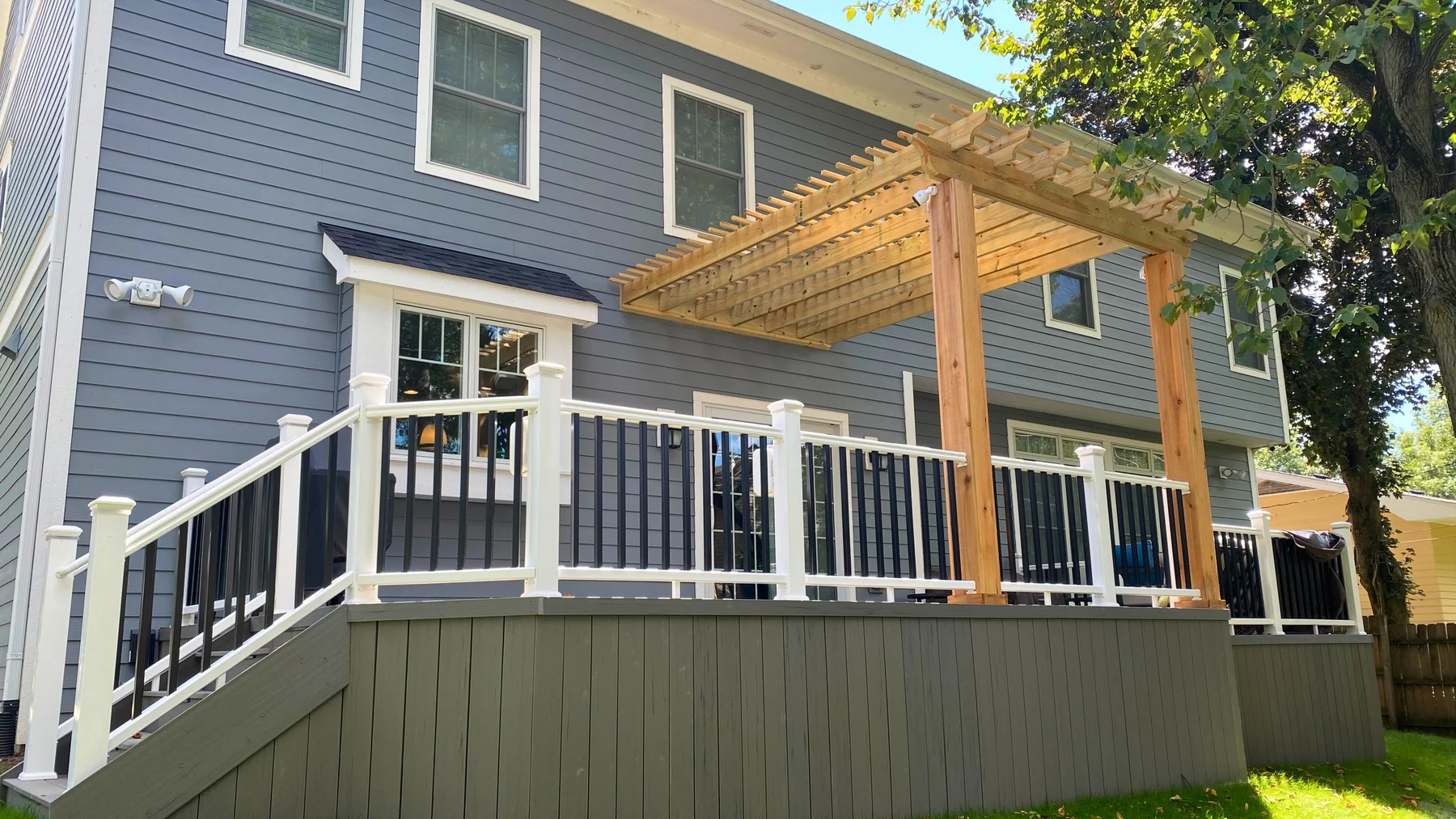
A deck is a serious investment, especially on a Smoky Mountain cabin where it is often the most-used space on the property. So it is fair to ask up front: how long will it actually last? The honest answer in Sevierville is that it depends heavily on the material you choose and how our specific mountain climate, freeze-thaw cycles, heavy rain, humidity, and shade under the tree canopy, treats it. This guide lays out realistic lifespans for each decking type here and what makes the difference between a deck that lasts a decade and one that lasts a generation.
Pressure-treated pine is the most common and affordable decking, and in the Smoky Mountain climate a well-built pressure-treated deck typically lasts ten to fifteen years for the boards, sometimes longer for the structure. Our wet, humid conditions and the freeze-thaw swings of a Sevierville winter are hard on wood, causing checking, cupping, and eventual rot if it is not maintained. The key phrase is if it is not maintained, because a pressure-treated deck that is cleaned and sealed on schedule reaches the top of that range, while a neglected one fails early.
Cedar and other naturally rot-resistant woods bring beauty and a bit of natural decay resistance, and they last roughly fifteen to twenty years with diligent care in our climate. They are softer and can show wear faster in a high-traffic rental, and like all wood they need regular sealing to fend off Smoky Mountain moisture. For an owner who loves the look of real wood and will keep up the maintenance, premium wood is a reasonable long-term choice, but it is not a set-and-forget material here.
This is where the math often favors spending more up front. Quality composite decking carries warranties of twenty-five years or more, and PVC decking can last even longer, often quoted at decades with minimal upkeep. In the Smoky Mountain environment, that durability is a real advantage because composite does not rot, does not need staining, and shrugs off the moisture and humidity that punish wood. For a rental cabin owner who cannot easily schedule constant maintenance, the long life and low upkeep of composite frequently wins out despite the higher initial cost.
An important distinction: the deck boards you walk on and the frame underneath can have very different lifespans. Often the pressure-treated frame outlasts the original wood boards, which is why resurfacing, replacing the boards and railing on a sound structure, is such a popular option here. When we assess an aging Sevierville deck, we look at the posts, beams, joists, and connections separately from the surface, because a deck with a solid structure and tired boards is a very different project from one with rot in the framing.
Several local factors cut deck life short. Standing water and poor drainage are the biggest, because trapped moisture rots wood and stresses fasteners. Deep shade under the tree canopy keeps a deck damp and encourages mold and mildew, especially on north-facing cabin decks. Debris left in board gaps holds water against the wood. Freeze-thaw cycles work fasteners loose over the winters. And simple neglect, skipping the cleaning and sealing a wood deck needs, is the most common killer of all. Addressing these is how you push a deck to the top of its range.
For wood decks, maintenance is the single biggest lever on lifespan. A pressure-treated or cedar deck that is cleaned annually and sealed every two to three years can last nearly twice as long as the same deck left to the weather. Composite needs only periodic cleaning to prevent mold in our damp climate, which is far less work. Whatever the material, keeping the board gaps clear, the drainage working, and the fasteners tight extends the life significantly. A little attention each year is cheap compared to rebuilding.
If your deck serves a short-term rental, factor in heavier use. A Pigeon Forge or Gatlinburg cabin deck sees far more foot traffic, furniture dragging, hot-tub moisture, and general wear than a private home deck, which effectively shortens the practical lifespan of a wood surface. This is a major reason so many rental owners in the Smokies choose composite: it holds up to constant guest use, always looks good in listing photos, and does not demand maintenance the owner has to coordinate around bookings.
A deck is only as durable as what holds it together. In our wet climate, cheap fasteners corrode, and corroded screws and loose joist hangers are a leading reason older Smoky Mountain decks become unsafe long before the wood itself gives out. We build with corrosion-resistant hardware and code-approved connectors rated for the chemicals in modern treated lumber, which react with the wrong metal. Hidden fastener systems on composite decks also keep the surface clean and avoid the popped screws that plague older decks after a few freeze-thaw winters. The hardware is invisible, but it is often what decides whether a deck lasts.
If you have an older deck and are wondering whether it has years left or is near the end, a professional look answers it fast. We check the ledger connection to the house, the footings, the posts and beams, and the fasteners, the parts that determine safety, not just the boards that determine looks. Many Sevierville homeowners are surprised to learn their structure is sound and only needs resurfacing, while others discover hidden rot that makes a rebuild the smart call. Either way, knowing beats guessing on something you and your guests stand on.
How long a deck should last depends on your plans for the property. If a cabin is a long-term hold or a forever home, investing in composite or PVC for a multi-decade life makes sense. If you plan to sell in a few years, a quality wood deck may deliver the look and value you need for less up front. We talk through your timeline and how the deck will be used so the material and the lifespan line up with what you actually need from the property in the Smokies.
The formula for a long-lived Sevierville deck is straightforward: build it right with proper drainage and quality fasteners, choose a material that matches how the deck will be used, and keep up the maintenance the material needs. Do those three things and even a wood deck reaches the top of its range, while a composite deck can last decades. When you are deciding, we help weigh the upfront cost against the lifespan and upkeep so the deck fits both your budget and how long you want it to last in the mountains.
With regular cleaning and sealing, a pressure-treated deck typically lasts ten to fifteen years for the boards in our climate, and cedar roughly fifteen to twenty. The Smoky Mountain combination of humidity, heavy rain, shade, and freeze-thaw is hard on wood, so maintenance is the biggest factor. A neglected wood deck fails well before a maintained one reaches the top of that range.
For many owners, yes. Quality composite carries warranties of twenty-five years or more and PVC can last decades, and neither rots or needs staining, which is a real advantage against our moisture and humidity. For a rental cabin with heavy guest use and hard-to-schedule maintenance, the long life and low upkeep of composite often outweigh its higher upfront cost.
Durable new decks and resurfacing engineered for the Smoky Mountain climate across Sevierville and the surrounding area.